Every vehicle on Indian roads has one thing in common—tyres eventually wear out. As India’s automotive sector continues to expand, so does the volume of discarded tyres. While this may seem like a routine waste management issue, it has evolved into one of the country’s fastest-growing environmental concerns.
Millions of end-of-life tyres (ELTs) are generated every year. Many are dumped in landfills, burned illegally, or stored in open spaces where they pose serious environmental and health hazards. At the same time, these discarded tyres contain valuable materials that can be recovered and reused instead of being wasted.
This is where tyre pyrolysis offers a promising solution.
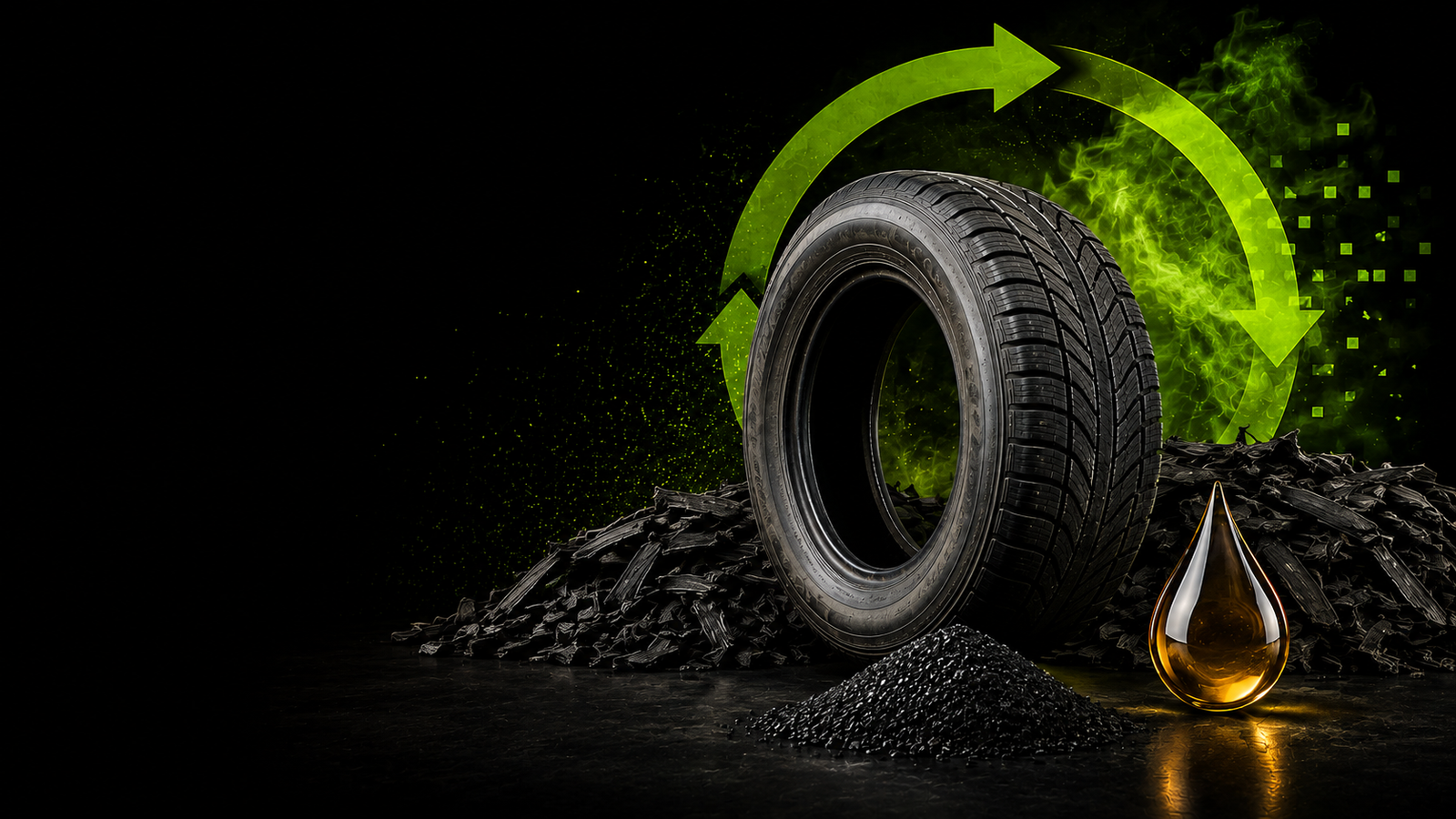
By converting waste tyres into reusable resources such as pyrolysis oil, recovered carbon black, steel, and combustible gas, pyrolysis supports India’s transition toward a circular economy while reducing environmental pollution.
Understanding India’s Tyre Waste Challenge
India is one of the world’s largest automotive markets. With millions of new vehicles added to the roads every year, tyre consumption continues to rise across passenger cars, trucks, buses, motorcycles, and industrial vehicles.
Unfortunately, every tyre has a limited lifespan.
As tyres reach the end of their service life, they become difficult to dispose of because they are designed to be extremely durable. Unlike organic waste, tyres do not decompose naturally and can remain in the environment for decades.
The result is an ever-growing stockpile of discarded tyres across the country.
Why Tyre Waste Is an Environmental Concern
1. Landfills Are Running Out of Space
Tyres occupy significantly more volume than many other waste materials due to their hollow structure.
When dumped in landfills, they:
-
Consume valuable landfill space
-
Trap methane gases
-
Create instability within landfill structures
-
Remain intact for decades
This makes traditional disposal both expensive and environmentally unsustainable.
2. Illegal Burning Causes Severe Pollution
In many regions, waste tyres are openly burned to recover steel or simply to reduce waste volume.
This practice releases:
-
Toxic smoke
-
Carbon monoxide
-
Sulphur compounds
-
Fine particulate matter (PM2.5)
-
Harmful hydrocarbons
These pollutants contribute to poor air quality, respiratory illnesses, and environmental degradation.
3. Tyre Dumps Become Fire Hazards
Large tyre stockpiles are extremely difficult to extinguish once they catch fire.
Tyre fires can burn continuously for weeks or even months, releasing toxic fumes and contaminating nearby soil and groundwater.
4. Loss of Valuable Resources
A discarded tyre is not simply waste.
It contains:
-
High-quality rubber
-
Carbon
-
Steel
-
Energy-rich hydrocarbons
Throwing tyres away means losing materials that could be recovered and reintroduced into industrial supply chains.
Why Traditional Recycling Isn’t Enough
Conventional tyre recycling focuses on:
-
Crumb rubber production
-
Playground surfaces
-
Sports tracks
-
Road construction
-
Rubber mats
While these applications are useful, they cannot absorb the rapidly increasing volume of discarded tyres generated across India.
Many tyres remain unsuitable for mechanical recycling due to contamination, excessive wear, or mixed compositions.
This creates the need for more advanced recycling technologies.
What Is Tyre Pyrolysis?
Tyre pyrolysis is a thermochemical recycling process that converts waste tyres into valuable products through heating in an oxygen-free environment.
Unlike open burning, pyrolysis does not involve combustion.
Instead, tyres are heated under controlled conditions, causing the rubber polymers to break down into useful by-products.
The process minimizes emissions while maximizing resource recovery.
Products Recovered Through Pyrolysis
1. Pyrolysis Oil
Pyrolysis oil is a high-energy liquid fuel that can be used in:
-
Industrial boilers
-
Furnaces
-
Cement plants
-
Energy-intensive manufacturing
After further refining, it may also serve as a feedstock for additional industrial applications.
2. Recovered Carbon Black (rCB)
Carbon black is one of the most valuable components recovered during pyrolysis.
Recovered carbon black is widely used in:
-
Rubber manufacturing
-
Plastic products
-
Industrial pigments
-
Construction materials
-
Automotive components
Using recovered carbon black also reduces dependence on virgin fossil-based carbon black production.
3. Recovered Steel
Tyres contain steel reinforcement that remains intact during the pyrolysis process.
The recovered steel can be recycled and reintroduced into steel manufacturing, reducing demand for virgin raw materials.
4. Pyrolysis Gas
The gases generated during pyrolysis are often reused to power the pyrolysis plant itself.
This improves overall energy efficiency and reduces external fuel requirements.
Environmental Benefits of Pyrolysis
Reduces Landfill Waste
Instead of occupying landfill space for decades, waste tyres become valuable industrial resources.
Lowers Carbon Footprint
Recovering materials reduces the need for extracting new raw materials, helping lower greenhouse gas emissions associated with manufacturing.
Supports Circular Economy
Pyrolysis transforms waste into reusable products, keeping valuable resources circulating within the economy instead of ending up in landfills.
Reduces Illegal Burning
By creating commercial value from waste tyres, pyrolysis provides an economically viable alternative to open burning.
Economic Benefits for India
Tyre pyrolysis is not only an environmental solution—it also creates economic opportunities.
Growing investment in sustainable recycling technologies can:
-
Generate employment
-
Encourage domestic manufacturing
-
Strengthen waste collection networks
-
Reduce dependence on imported raw materials
-
Support India’s clean energy goals
As demand for recycled materials continues to grow, pyrolysis plants are becoming an important part of India’s green industrial ecosystem.
Government Focus on Sustainable Waste Management
India has increasingly strengthened its policies around waste management, Extended Producer Responsibility (EPR), and resource recovery.
The government’s emphasis on:
-
Circular economy initiatives
-
Sustainable manufacturing
-
Industrial decarbonization
-
Waste-to-resource technologies
is encouraging greater adoption of environmentally responsible tyre recycling practices.
Companies investing in compliant and environmentally sound pyrolysis technologies are well-positioned to contribute to these national sustainability objectives.
Challenges That Still Need Attention
While pyrolysis offers significant potential, responsible implementation remains essential.
Key priorities include:
-
Adoption of environmentally compliant technologies
-
Strict emission control systems
-
Quality standards for recovered products
-
Organized tyre collection systems
-
Regulatory oversight
-
Public awareness about responsible tyre disposal
When these factors come together, pyrolysis can deliver long-term environmental and economic benefits.
The Future of Tyre Recycling in India
India’s vehicle population will continue to grow over the coming decades.
That means tyre waste will also continue to increase.
Instead of viewing discarded tyres as a disposal problem, the country has an opportunity to recognize them as a valuable resource.
Modern pyrolysis technology enables waste tyres to be transformed into fuel, carbon black, steel, and energy—reducing pollution while supporting sustainable industrial growth.
As India advances toward a cleaner, greener, and more circular economy, tyre pyrolysis is expected to play an increasingly important role in responsible waste management.
Conclusion
Tyre waste is no longer just an environmental challenge—it’s an opportunity to rethink how resources are managed. With millions of tyres reaching the end of their life each year, India needs scalable, environmentally responsible solutions that go beyond traditional disposal methods.
Tyre pyrolysis offers exactly that. By recovering valuable materials, reducing landfill dependency, minimizing pollution, and supporting a circular economy, it transforms end-of-life tyres into useful industrial resources rather than environmental liabilities.
At Rover Renewables, we believe sustainable innovation is the key to solving tomorrow’s environmental challenges. By embracing advanced recycling technologies and responsible resource recovery, we can help build a cleaner, more resilient future for India—one tyre at a time.