How we do IT
We convert end-of-life tyres into tyre pyrolysis oil, recovered carbon black, and steel through automated, oxygen-free reactors built for consistency, compliance, and scale. One partner, one process, from collection to recovery.
We manage the full cycle in-house sourcing, conversion, and recovery, so you’re not coordinating between multiple vendors. One relationship covers collection, processing, and every material that comes out the other end.
Collection
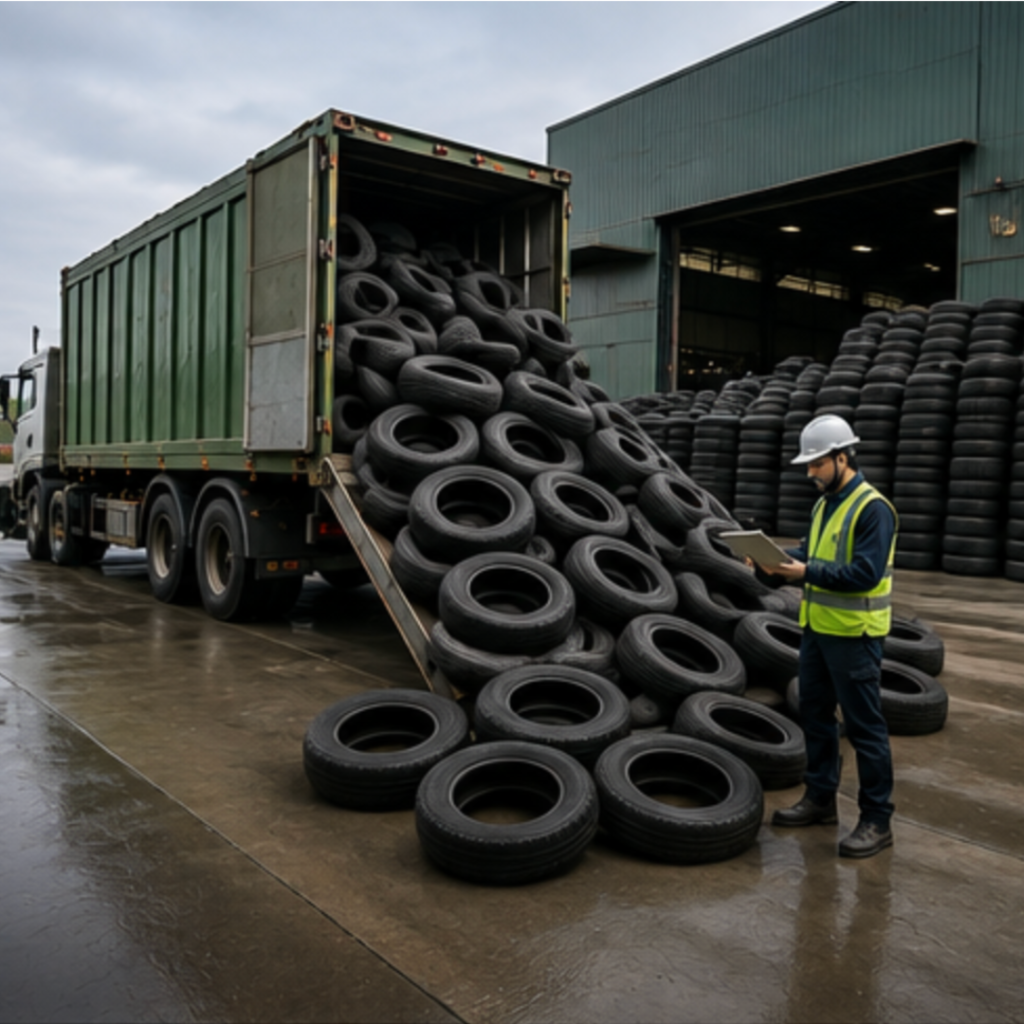
We source end-of-life tyres directly from industries, transport and fleet operators, municipal bodies, and authorised suppliers never from informal or unregulated channels. Every intake is logged and visually inspected before acceptance, giving partners a clean, documented chain of custody from collection point to reactor.
Processing
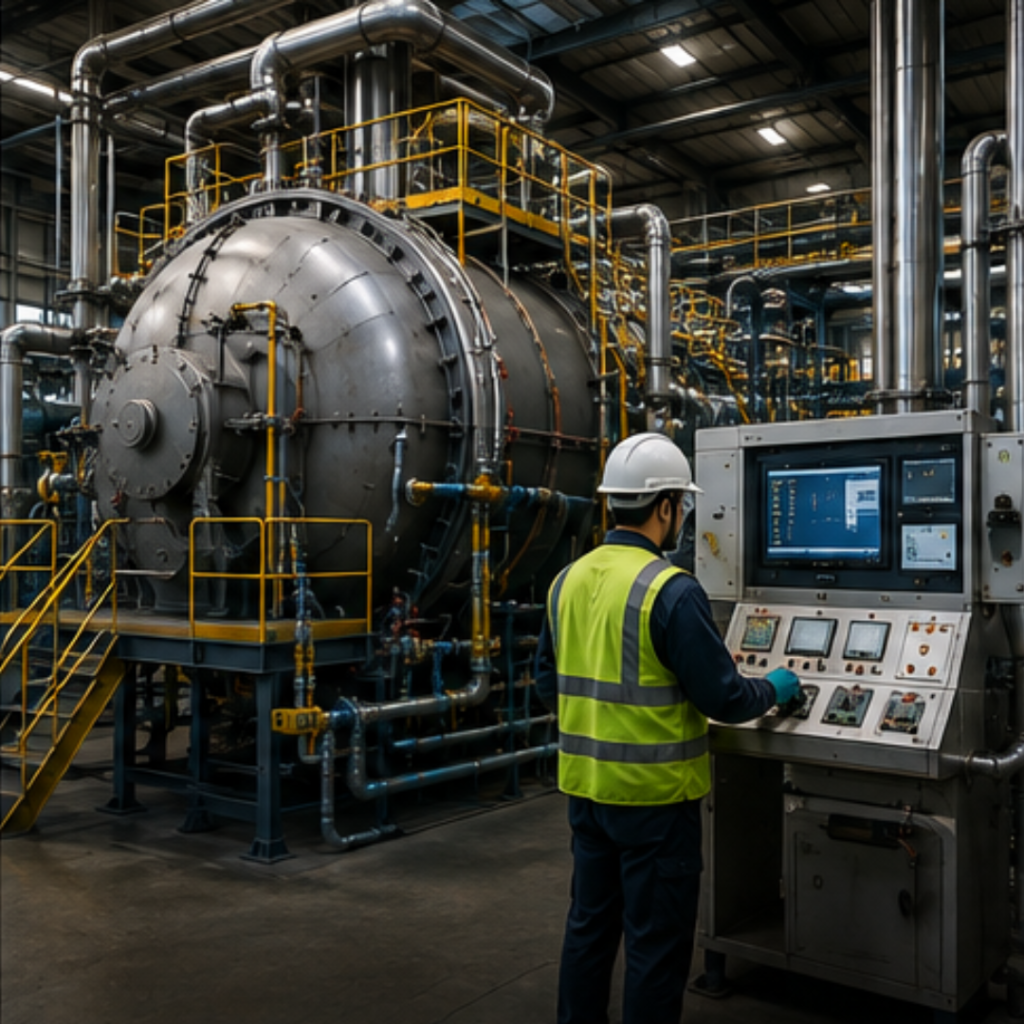
Tyres are broken down through oxygen-free thermal decomposition inside automated, PLC-controlled reactors not incineration, not open burning. Reactor temperature, timing, and output are monitored in real time, turning tyre disposal into a controlled manufacturing process rather than a variable one.
Fuel
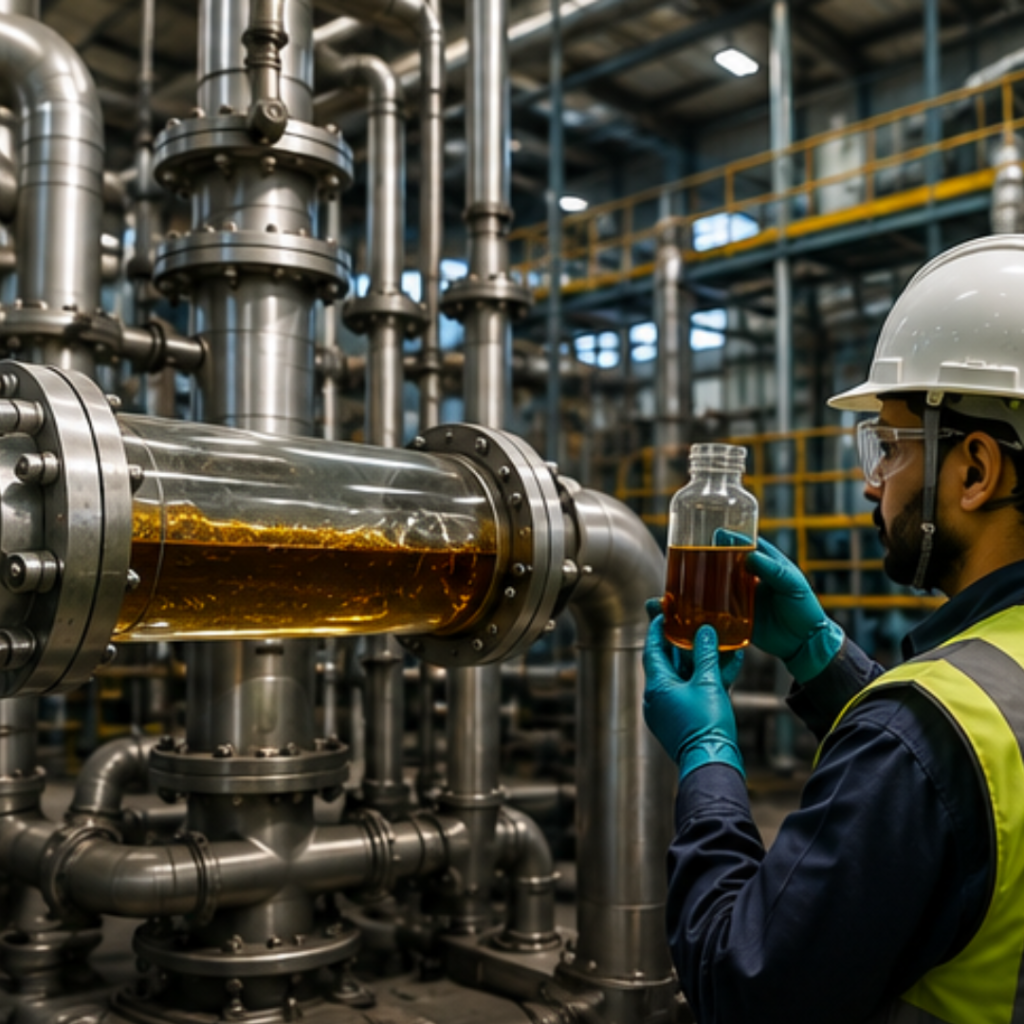
Hydrocarbon vapours from the reactor are captured through a multi-stage condensation cascade and converted into tyre pyrolysis oil. Each stage is quality-checked before storage, producing a consistent, industrial-grade fuel alternative ready for heating and processing applications.
Material
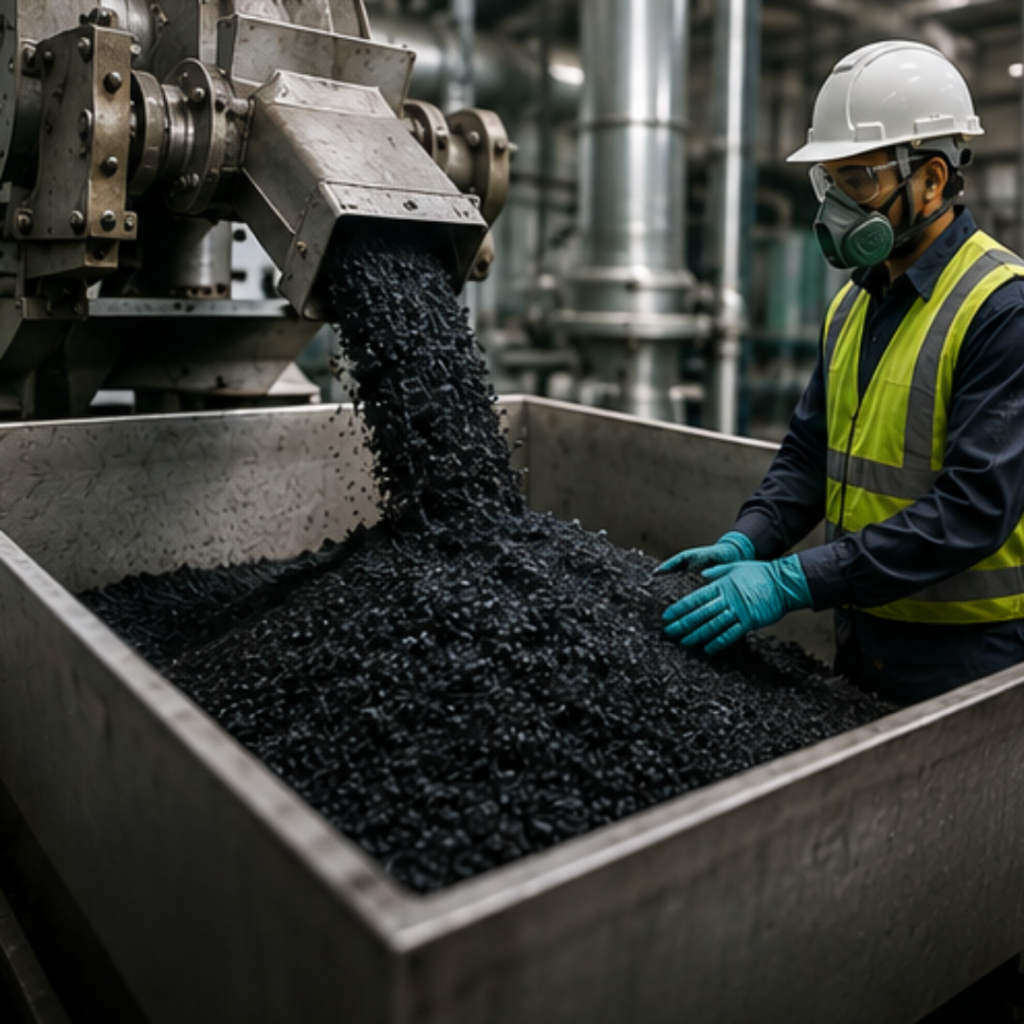
Solid residue separated from the reactor is processed into recovered carbon black, suitable for rubber compounding, plastics manufacturing, and construction materials. Because it comes from a controlled thermal process rather than informal reclaiming, quality stays consistent batch to batch.
Metal
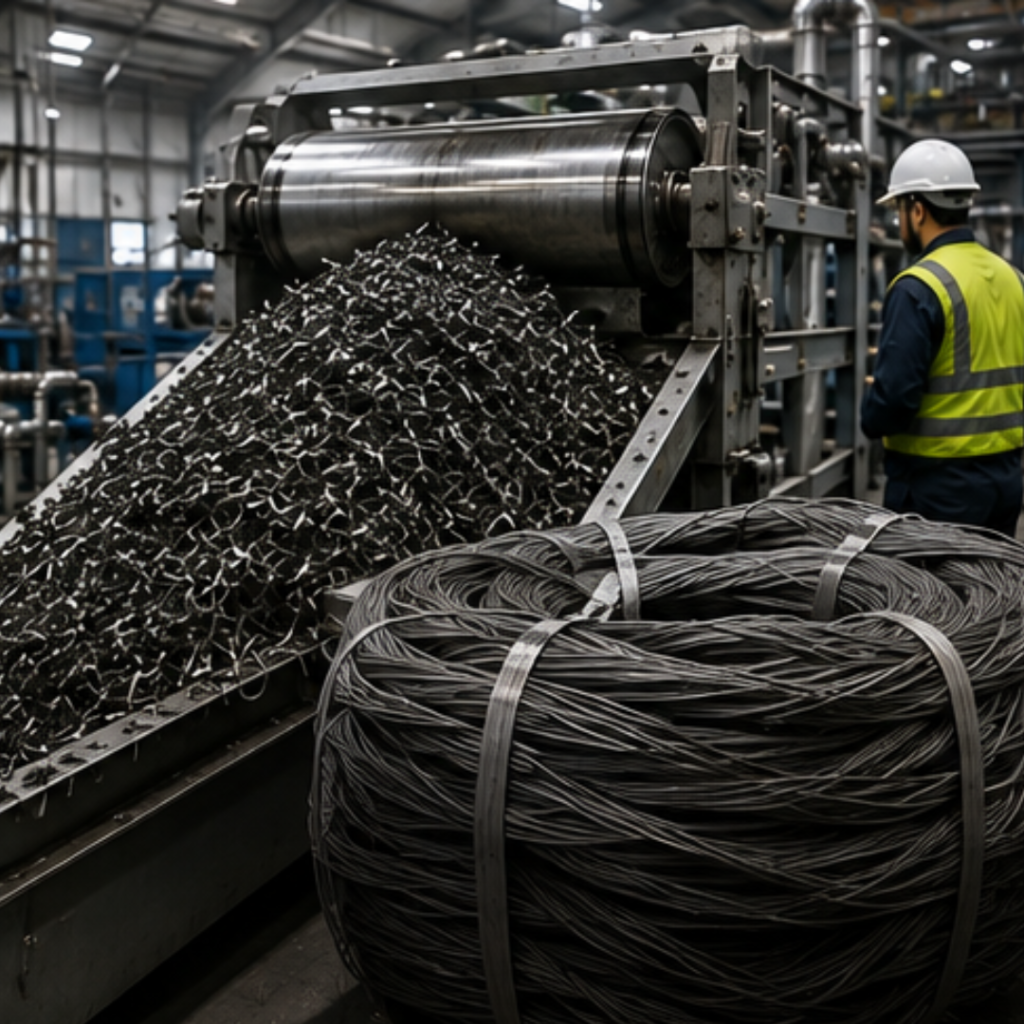
Steel wire is separated from the rubber during processing and recovered as a distinct, sellable output rather than treated as waste. It’s high-quality scrap steel, ready for manufacturers to source directly reducing dependency on virgin ore.
Compliance
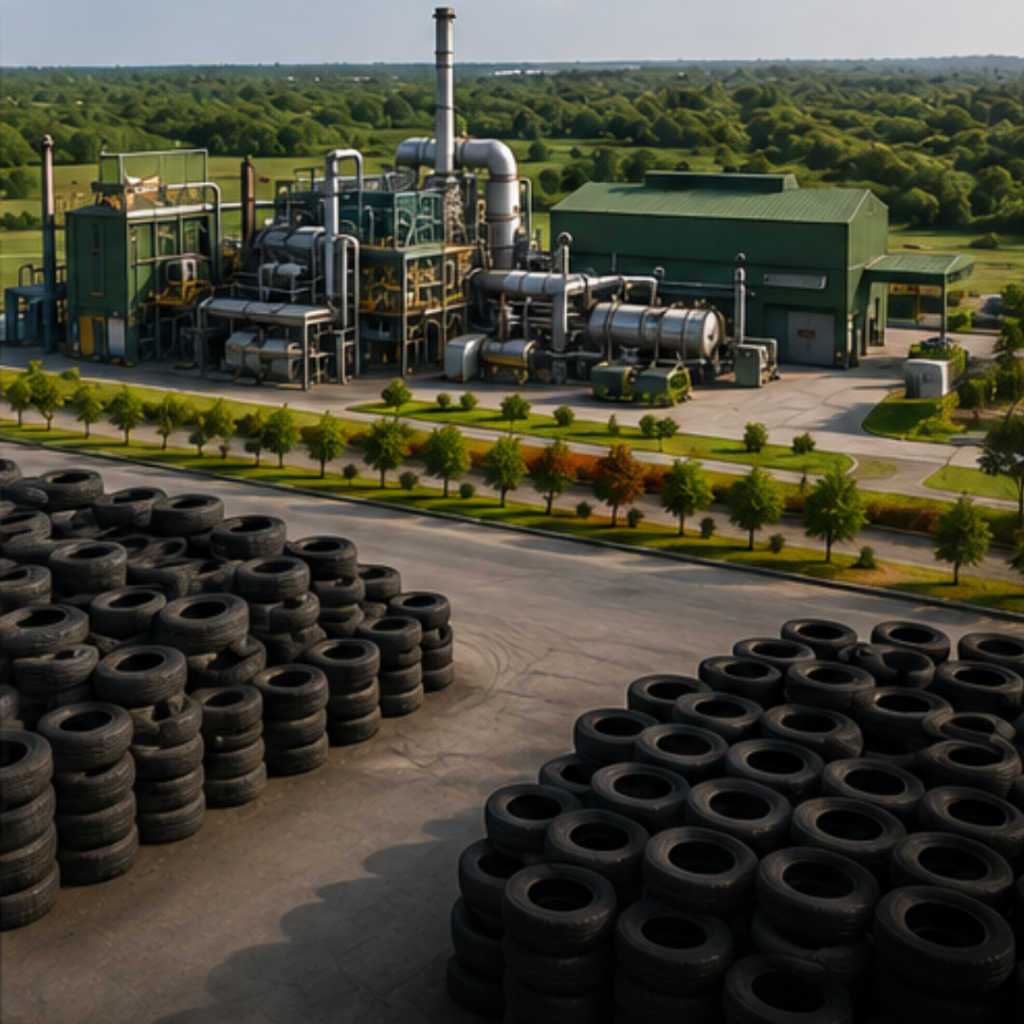
Beyond processing, we help industries, municipalities, and transport operators build documented, compliant disposal pathways for tyre waste moving partners away from stockpiling or unmanaged landfill disposal toward a recycling process they can report on with confidence.
Share a little about your house and the kind of collaboration you have in mind. A partnership liaison will respond personally within four working hours.
Direct Line
Partnerships Desk
Address
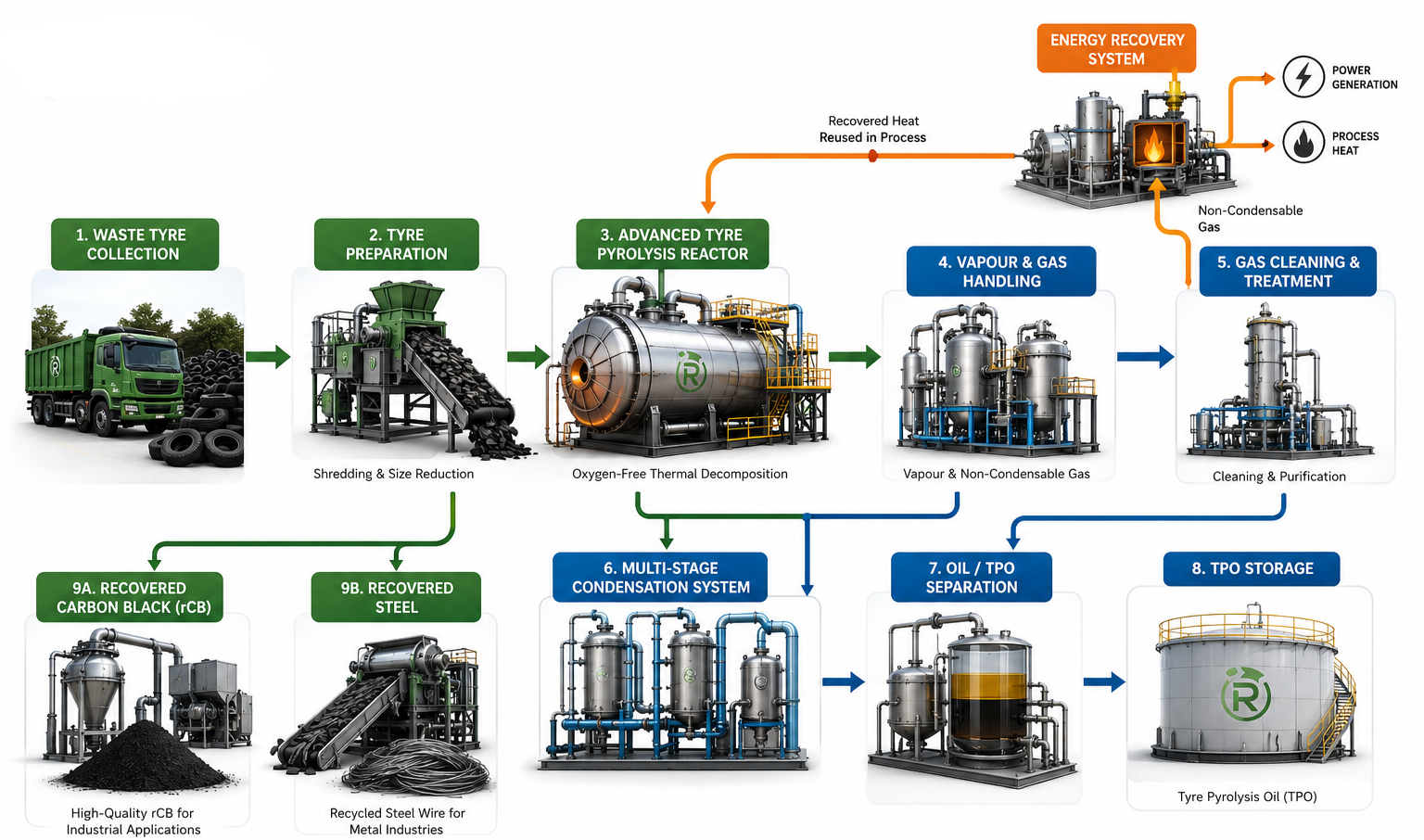
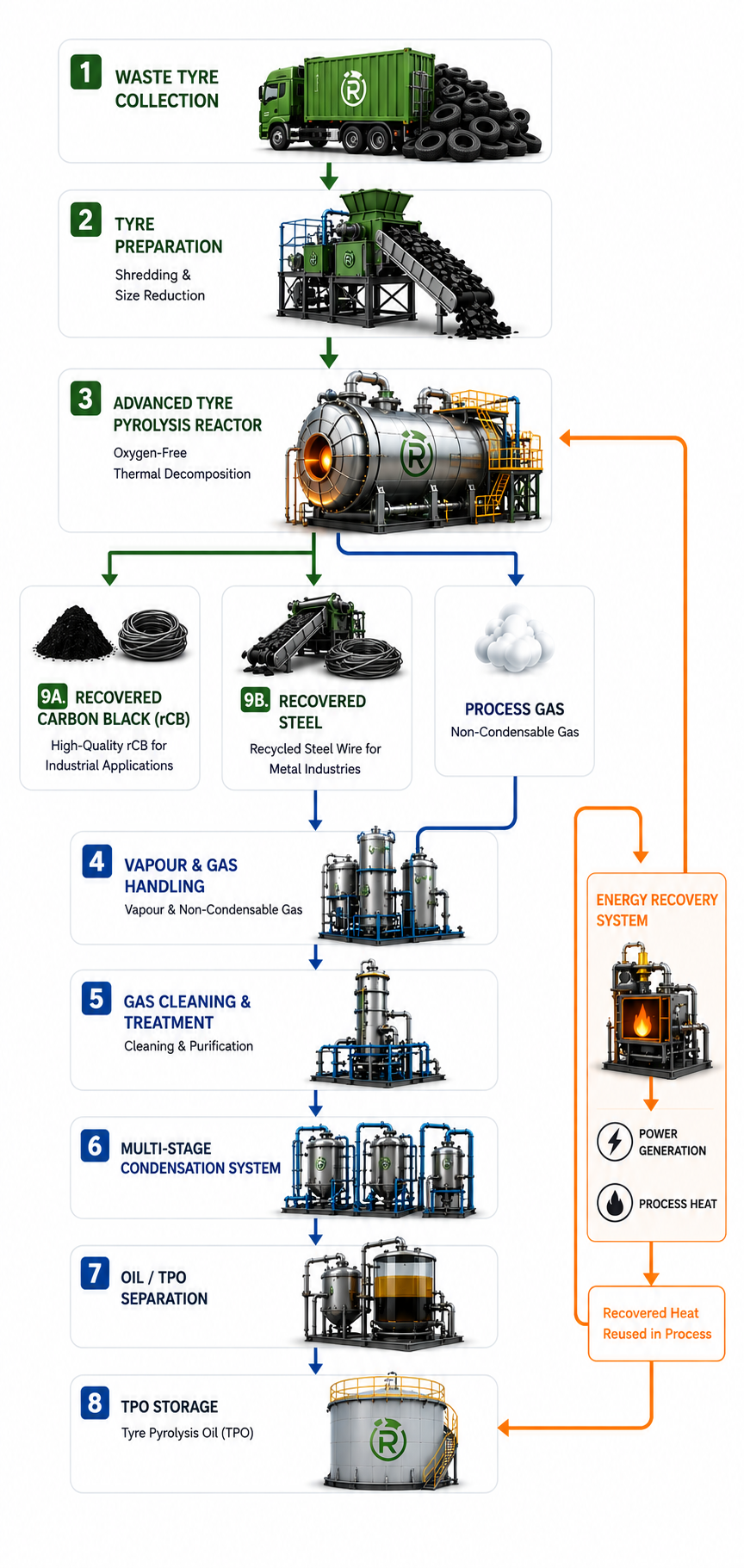
Our process is designed to recover maximum value from every tyre. From responsible collection and tyre preparation through advanced oxygen-free pyrolysis, vapour treatment, condensation and separation, each stage is carefully controlled to recover valuable outputs including Tyre Pyrolysis Oil (TPO), Recovered Carbon Black (rCB) and steel. Non-condensable gases are treated and energy is recovered within the process, helping create an efficient and circular approach to tyre recycling.
We hear the same questions from almost everyone who reaches out whether pyrolysis is the same as burning tyres, what actually comes out of the reactor, or how to become a supplier or buyer. Rather than making you search through our Process and Services pages, we’ve gathered the most common answers here.
No. Pyrolysis takes place inside a sealed, oxygen-free reactor, so there’s no open flame and no combustion. It’s a controlled thermal breakdown, not incineration closer to a manufacturing process than a disposal one.
Every tyre we process is one that doesn’t sit in landfill for decades, or end up illegally stockpiled or burned in the open both of which carry real pollution and fire risk. Instead, it’s converted into oil, carbon black, and steel that industries can put back to use, easing demand on virgin raw materials.
We source only from authorised suppliers industries, transport and fleet operators, and municipal bodies. Every intake is logged and inspected on arrival, so there’s a documented chain of custody from collection through to finished output.
It’s suited to rubber compounding, plastics manufacturing, and construction materials. Because it comes out of a controlled thermal process rather than informal reclaiming, the quality holds steady batch to batch something buyers can rely on.
Nothing is discharged after a single use. Water is recirculated through what we call the cycle pool, passing back through the system rather than being released. Gas goes through water film dust removal and a desulfurization tower, with any remaining tail gas routed to the combustion chamber for energy recovery.